
The EB-1 India priority date has become one of the most closely watched — and most frustrating — benchmarks in U.S. employment-based immigration, with wait times now stretching well beyond a decade for many applicants.
The EB-1 category covers three distinct pathways: EB-1A for individuals with extraordinary ability, EB-1B for outstanding professors and researchers, and EB-1C for multinational managers and executives. You can review the core eligibility criteria for each to understand which subcategory fits your situation. Despite EB-1’s reputation as a “premium” classification, India-born applicants face the same per-country demand caps that create severe backlogs in the EB-2 priority date queue — and increasingly, in EB-1 as well.
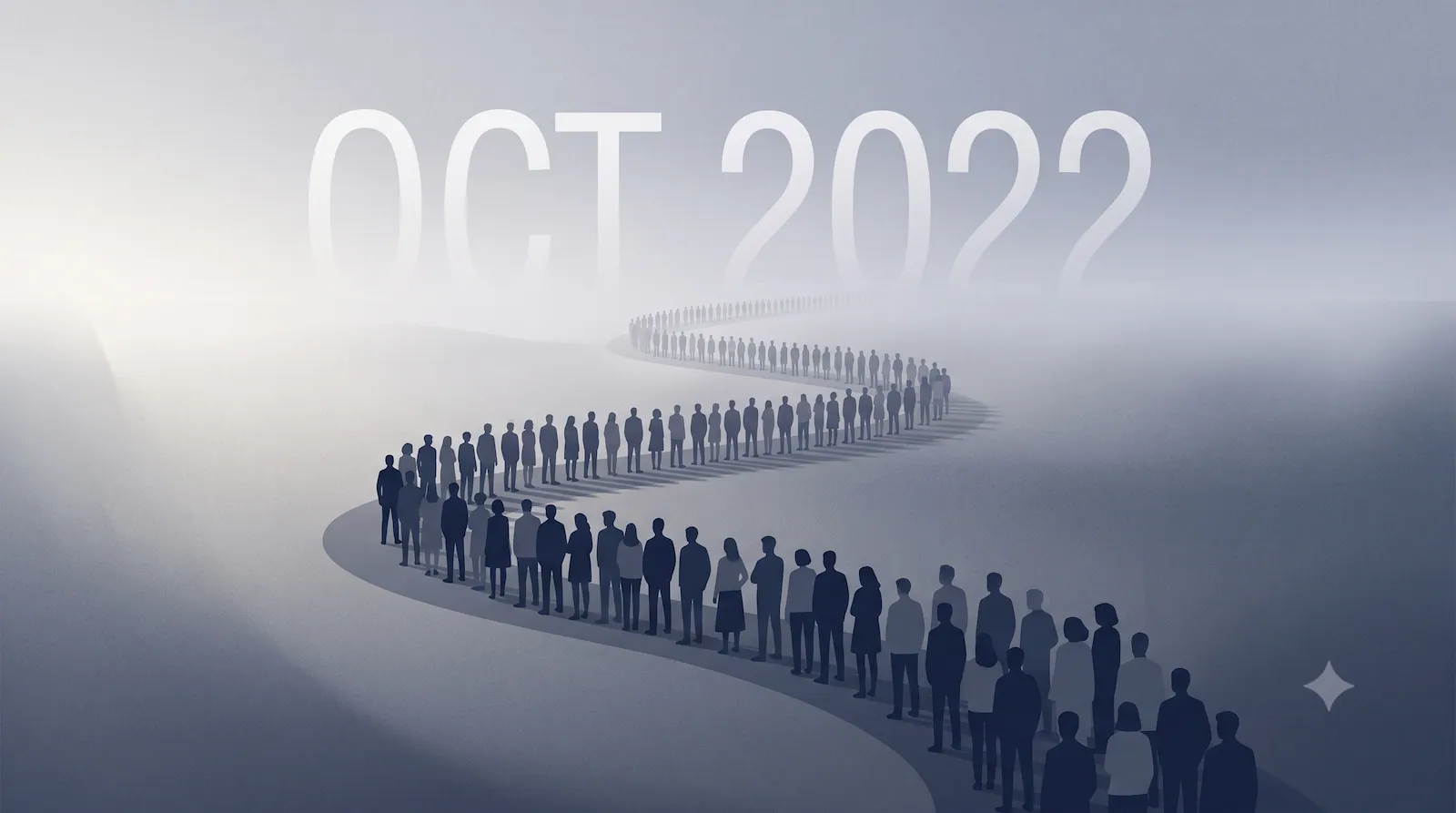
The June 2026 Visa Bulletin confirmed a sharp retrogression, with the Final Action Date for India EB-1 sitting around October 2022 — meaning only applicants with a priority date on or before that cutoff can currently receive their green card. Two structural forces drive this: the 7% per-country annual cap on employment-based visas and the sheer volume of India-born petitions filed each year.
Understanding how the Final Action Dates and Dates for Filing charts differ — and which one USCIS authorizes applicants to use in any given month — is the critical next step.
Understanding the ‘Final Action’ vs. ‘Dates for Filing’ Gap
The Department of State publishes two separate priority date charts each month, and confusing them is one of the most common — and costly — mistakes EB-1 India applicants make.
Chart A (Final Action Dates) shows when a visa number is actually available — meaning your green card can be approved. Chart B (Dates for Filing) shows an earlier cutoff that, when USCIS authorizes its use, lets you submit Form I-485 before a visa number is immediately available. The distinction matters enormously. You can track both charts in the monthly Visa Bulletin, but USCIS — not the State Department — decides each month which chart governs I-485 filings. Check USCIS’s Adjustment of Status Filing Charts before submitting anything, since the authorization can shift month to month.
The practical upside of filing under Chart B is significant: once USCIS accepts your I-485, you can immediately apply for an Employment Authorization Document (EAD) and Advance Parole. That combination lets you work legally and travel internationally without relying on your existing visa status — a critical lifeline when EB-1 and eb2 priority date backlogs stretch for years. And because your place in line is locked to your original priority date, filing earlier under Chart B doesn’t accelerate green card approval, but it does unlock these interim benefits sooner.
Understanding which chart controls your filing window is foundational before diving into why those dates move — or suddenly move backward.
Why the EB-1 India Priority Date Moves Slowly (or Retrogresses)
The EB-1 India priority date moves slowly — and sometimes backward — because a fixed annual cap of roughly 7% per country collides with an overwhelming volume of Indian-born petitions filed every year.
That per-country ceiling doesn’t scale with demand. No matter how many Indian nationals apply, the number of EB-1 visas available to them each fiscal year stays essentially the same. And because applicants from India dominate employment-based filings, that ceiling is hit quickly, leaving thousands of approved petitions in a years-long queue. The same structural pressure squeezes the eb2 india priority date, which competes for numbers from the same limited country pool.
The Congressional Research Service confirms the mechanics behind this bottleneck in stark terms: EB-1, EB-2, and EB-3 are each capped at exactly 40,040 visas per year, together accounting for 86% of the 140,000 total employment-based green cards issued annually — a ceiling that has not changed since 1990 even as demand has multiplied several times over. The CRS report on U.S. Employment-Based Immigration Policy also notes that Indian, Chinese, Filipino, Brazilian, and Korean nationals together accounted for 48% of all employment-based immigrants in FY2023, a concentration that all but guarantees the per-country ceiling gets exhausted well before demand does. That structural reality, set by statute rather than by any single Visa Bulletin cycle, is why incremental legislative fixes rarely move the needle on India’s queue.
Spillover visas — unused numbers from lower-preference categories or from countries with lower demand — have historically offered some relief. But in 2026, that spillover has decreased sharply, largely because more applicants across all categories are actively filing and consuming available numbers before they can cascade to India’s backlog.
Retrogression happens when the monthly Visa Bulletin pulls a priority date backward to prevent visa overissuance within the fiscal year. It’s not a penalty — it’s a recalibration when demand exceeds the remaining annual supply. That pattern sets the stage for understanding whether forward movement is realistic in the months ahead.
Wait Time Predictions: Will EB-1 India Move in 2026?
The eb1 priority date india outlook for 2026 is cautiously pessimistic — modest forward movement is possible in the first quarter of the fiscal year, but sustained advancement faces serious headwinds from demand volume and visa exhaustion patterns.
October as the Reset Window. Each new fiscal year begins on October 1, releasing a fresh allocation of employment-based visa numbers. That reset historically produces the most reliable forward movement for Indian applicants, since unused numbers from other categories can roll over and temporarily expand availability. In practice, the October through December window tends to be the most productive stretch of any given year for EB-1 India advancement.
Where 2022 and 2023 Dates Stand. Based on current Visa Bulletin trajectory, priority dates from late 2022 reaching current status could still take several more fiscal cycles. Dates anchored in 2023 face an even longer runway. Immigration practitioners tracking EB-1 India patterns note that annual forward movement often measures in weeks rather than months.
Visa Exhaustion Stalls. A recurring pattern emerges mid-fiscal year — typically between April and August — when available visa numbers run thin. During these exhaustion windows, the monthly Visa Bulletin may hold dates flat or trigger retrogression rather than advance them. Understanding that cyclical rhythm is essential before projecting any realistic timeline — and it’s precisely what quarterly movement trends reveal in sharper detail.
Quarterly Movement Trends and Fiscal Year Cycles
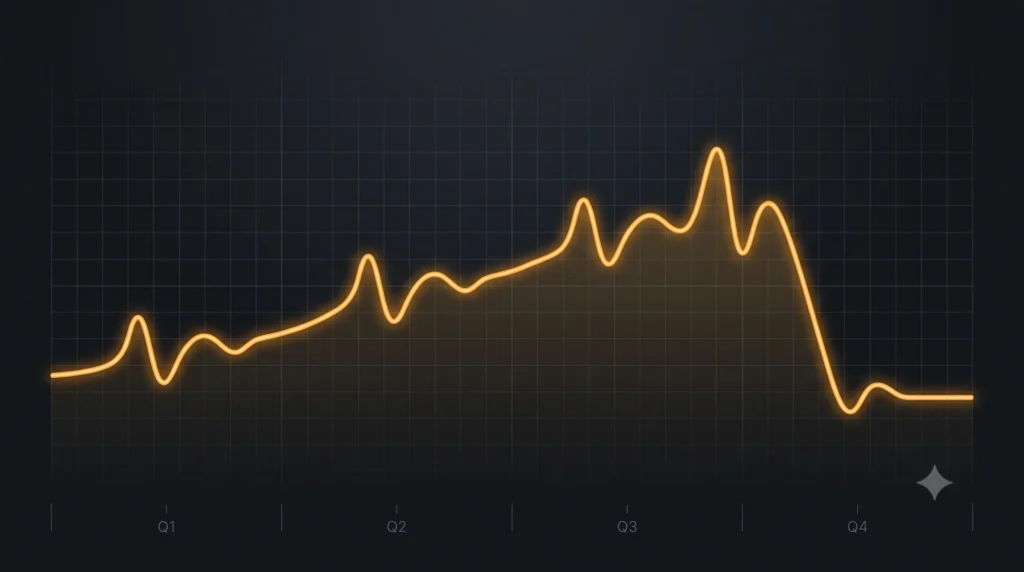
The EB-1 India priority date follows a predictable fiscal-year rhythm — early optimism in October, modest gains through winter, and mounting pressure that often triggers retrogression by late spring.
October resets the annual visa allocation, making that first Visa Bulletin the most consequential update Indian applicants track each year. Fresh numbers flow into every employment-based category simultaneously, which tends to produce the most generous forward movement of the fiscal year. That window is brief, though. As competing demand from other countries and categories consumes available numbers, the pace of advancement slows considerably by January or February.
The second half of the fiscal year — roughly April through September — is where the pattern turns punishing. The June 2026 Visa Bulletin illustrated this sharply, pulling both EB-1 and eb 2 visa priority date numbers backward as annual supply ran thin. That type of retrogression isn’t unusual; it’s a near-annual feature of how the system exhausts its cap before the fiscal year closes.
One underappreciated monitoring signal is the pending I-485 inventory held at USCIS. When that inventory is large relative to available visa numbers, forward movement stays constrained regardless of what the October reset delivers.
Recent USCIS inventory data puts a number on what applicants are already feeling: pending EB-1 India I-485 cases grew 42% year over year, from 15,419 in January 2025 to 21,904 in January 2026. Within that queue, priority dates from 2022 alone account for 13,446 pending cases — 64% of the entire EB-1 India backlog — according to USCIS pending inventory data analyzed by GreenCardClock. That concentration explains why the Final Action Date has been creeping forward in small steps rather than large jumps: any advance past April 2023 hits a near-empty gap in the queue, since only 15 pending cases exist between May and July 2023 combined.
Tracking both the monthly Visa Bulletin and USCIS processing data together gives a clearer picture of realistic timelines — context that’s essential before mapping your own scenario onto projected green card approval windows.
Scenario Analysis: When to Expect Your Green Card
Your realistic green card timeline depends heavily on your exact priority date — and the gap between a late-2022 filing and a mid-2023 filing can translate to years of additional waiting under current EB-1 India conditions.
Priority Date Position Matters More Than You Think. In practice, applicants with priority dates from late 2022 sit closer to the current Final Action Date cutoff than those who filed in mid-2023 — but “closer” is relative. Given how slowly the monthly Visa Bulletin advances dates for India, even a six-month gap in priority dates can represent two to three additional years before a visa number becomes available. Analysts tracking the June 2026 retrogression noted in the Visa Bulletin reporting that mid-2023 filers face a substantially steeper climb.
EB-1A vs. EB-1C Dynamics. The EB-1C multinational manager subcategory tends to generate higher corporate-sponsored petition volumes than EB-1A extraordinary ability filings, which applicants self-petition more selectively. And because EB-1C demand tracks corporate transfer cycles, it can spike unpredictably — adding pressure to a shared annual cap that already moves slowly for Indian nationals. This also draws a useful comparison to the eb 3 priority date india trajectory, where subcategory demand similarly distorts wait times within a fixed allocation.
What Could Accelerate Movement. Legislative reform — such as eliminating or raising per-country caps — remains the most impactful potential accelerant, though no such bill has cleared Congress as of 2026. Administrative policy shifts, like expanded use of the Dates for Filing chart or revised USCIS filing guidance, can create short-term filing windows without changing underlying visa supply. These variables are worth monitoring, and they connect directly to mechanisms that most standard EB-1 guides overlook entirely.
Industry Insider: What Most EB-1 Guides Miss About Priority Dates
Most EB-1 India guides focus on published cutoff dates — but the mechanics driving those numbers involve layers that rarely get explained, and missing them leads to serious miscalculations.
The Invisible Backlog. An approved I-140 petition doesn’t automatically register as demand in the monthly Visa Bulletin. The Department of State estimates forward movement using pending case data, consular reports, and historical usage patterns — not raw I-140 counts. That lag means backlogs can be far larger than current cutoff dates suggest.
Interfiling Compounds the Picture. Applicants moving between categories — say, shifting from an india eb3 priority date to EB-1 — can retain their original priority date, which floods the EB-1 queue with older, unexpectedly early dates. This cross-category demand directly pressures the EB-1 India cutoff without appearing in standard petition counts.
Consulate vs. USCIS Allocation. Visa numbers are divided between consular processing abroad and adjustment of status at USCIS service centers. When one channel draws heavily, the other faces tighter supply — a dynamic the USCIS filing charts don’t make transparent. Understanding this split matters when projecting realistic movement — and it connects directly to why category interactions, like EB-2 downgrades and EB-3 upgrades, can reshape your timeline in ways that catch most applicants off guard.
The Impact of EB-2 and EB-3 Downgrades/Upgrades
When EB-2 India retrogresses sharply — as it did in June 2026 — many applicants start looking at EB-1A self-petitions as an escape route, making category interactions a central piece of any realistic priority date strategy.
Why Category Switching Matters. The June 2026 Visa Bulletin confirmed simultaneous pressure on both EB-1 and EB-2 India, pushing applicants to evaluate whether an EB-1A self-petition or a category port offers a meaningful advantage. The answer depends almost entirely on the priority date you’d carry into the new category.
Porting Preserves Your Place in Line. The porting mechanism allows you to retain an earlier priority date from a prior EB-2 or EB-3 filing when you switch to a different employment-based category — provided an I-485 has been pending for at least 180 days and certain conditions are met. For applicants tracking the eb3 priority date for india alongside their EB-1 options, this matters: a 2019 EB-3 priority date ported into an EB-1A petition can represent years of queue position preserved.
Practical Considerations for Engineers and Researchers. Software engineers and research scientists face a specific trade-off. Switching from EB-2 to EB-1A requires demonstrating extraordinary ability — a meaningfully higher evidentiary bar — and a weak underlying petition can trigger an RFE that erases any timeline advantage the port created. That evidence quality question is, in fact, where the next section picks up.
The Role of Technical Evidence Mapping in Priority Date Strategy
A favorable green card priority date only delivers value if the I-140 petition behind it can survive adjudication — and that’s where many EB-1 India applicants lose ground they spent years accumulating.
Petition Quality Is the Multiplier. In practice, a strong priority date position means nothing if an RFE derails the underlying petition. Adjudicators apply specific evidentiary standards to each EB-1 sub-category — extraordinary ability (EB-1A), outstanding researcher (EB-1B), and multinational manager (EB-1C) each carry distinct criteria, and evidence that satisfies one category often falls short for another. Mapping technical achievements — publications, awards, salary comparisons, leadership scope — directly to the regulatory criteria is what separates approvable petitions from ones that stall.
Aligning Evidence to Adjudicator Standards. What typically happens in weak petitions is that applicants document accomplishments without translating them into the language adjudicators use to evaluate extraordinary ability or outstanding research. A patent filing is not self-evidently “original contributions of major significance.” That bridge has to be built explicitly in the petition record, with supporting documentation that speaks to the standard rather than simply listing credentials. The EB-1 priority date India resource at BayLegal reinforces that petition robustness directly affects how efficiently an approved priority date converts to a final green card. And with EB-1 India dates moving as slowly as they do in 2026, a single RFE cycle can cost an applicant a filing window that won’t reopen for months — risks that connect naturally to the broader strategic trade-offs the next section addresses.
Limitations, Considerations, and Strategic Trade-offs
Tracking the current priority date for EB-1 India is only the starting point — understanding the constraints around it separates realistic planning from wishful thinking.
Visa Bulletin projections are probabilistic, not guaranteed. The monthly Visa Bulletin reflects demand estimates that can shift without warning, as the June 2026 retrogression demonstrated. Building rigid timelines around predicted movement routinely produces disappointment.
Aging-out risk is an underappreciated exposure. Children included as derivatives on a parent’s petition must be under 21 at the time a visa number becomes available. Retrogression can push that window past a child’s birthday, triggering immediate complications that are difficult to reverse.
The EB-1A versus EB-1C trade-off involves more than timing. A self-petition offers independence from employer sponsorship but demands a higher evidentiary bar. Waiting for an employer-sponsored EB-1C preserves more stable organizational support — but leaves you dependent on continued employment.
And when EB-1 timelines stretch beyond a decade, O-1A status or a National Interest Waiver petition may offer a more practical near-term path — trade-offs worth weighing before assuming “current” status means what most applicants expect it to.
Common Misconceptions About ‘Current’ Status
When the eb1 current date India turns “Current” in the Visa Bulletin, it does not mean your green card is days away — it means a visa number is available to be used, which is only the first step in a much longer process.
Visa availability and USCIS processing time are entirely separate clocks. A “Current” designation from the Visa Bulletin simply unlocks the ability to file Form I-485 or have a consular interview scheduled. USCIS still needs to adjudicate that application, which can take anywhere from several months to well over a year depending on field office backlogs and case complexity.
And “Current” status can disappear just as quickly as it arrives. Demand fluctuates month to month, and when USCIS or the National Visa Center projects higher-than-expected usage, the monthly Visa Bulletin can retrogress a date that was current just 30 days prior — leaving applicants mid-process in a suddenly closed window.
In practice, treating a “Current” designation as a finish line leads to costly miscalculations. The EB-1 priority date India resource at BayLegal makes clear that priority date movement and final case approval operate on independent timelines — a distinction that shapes every decision you’ll make while maintaining valid status through the wait.
Maintaining Legal Status During Long Wait Times
For EB-1 India applicants, the years between I-140 approval and a usable priority date aren’t passive — they require active, deliberate status management.
H-1B extensions beyond the six-year cap are one of the most practical tools available. Under AC21, an approved I-140 with a priority date more than 365 days old qualifies you for one-year H-1B extensions, indefinitely renewable until your case resolves. That single provision is what keeps most India-born professionals legally employed through multi-year waits.
Non-immigrant intent becomes a more delicate issue for visa types outside H-1B. Certain categories require demonstrating intent to return home — and a pending I-140 can complicate that showing if not carefully documented. Employment changes add another layer: if you switch employers after I-485 filing, AC21 portability rules allow you to retain your priority date, but only if the new role is in the same or similar occupational classification. And if your employer withdraws the I-140 before 180 days post-filing, portability protection disappears entirely — a contingency worth building into any job negotiation. These layered considerations tie directly into the key takeaways that every EB-1 India applicant should carry forward.
Summary: Key Takeaways for EB-1 India Applicants
The EB-1 India priority date in late 2026 remains anchored near the October 2022–2023 cutoff range — and every planning decision you make should start from that baseline reality.
As covered throughout this guide, the path from I-140 approval to an approved green card involves multiple independent clocks running simultaneously. Here are the core takeaways worth carrying forward:
- Verify filing eligibility every month. Always check the USCIS Adjustment of Status Filing Charts before submitting Form I-485 — the Visa Bulletin’s Final Action Date and the Dates for Filing chart don’t always align, and submitting on the wrong date can cost you a filing window.
- Treat retrogression as structural, not exceptional. Cyclical fiscal-year pressure — particularly at Q3 and Q4 — is a recurring feature of EB-1 India, not an anomaly. Tracking the monthly Visa Bulletin alongside quarterly usage data is the only reliable way to anticipate it.
- EB-1A self-petitions offer control at a cost. Independence from employer sponsorship is genuinely valuable in a long-queue environment — but it demands evidence that meets an extraordinary-ability standard, not merely a strong professional record.
- The data picture extends beyond the Visa Bulletin. For deeper context on where cutoffs are headed and how to position your petition, the resources covered in the next section point to the authoritative primary sources worth bookmarking now.

Where to Look Next for Data
The most reliable EB-1 India priority date research starts with primary government sources — not third-party summaries that may lag behind monthly updates by weeks.
The monthly Visa Bulletin from the Department of State is the non-negotiable starting point. It publishes both the Final Action Dates and Dates for Filing charts, and it releases on a predictable schedule — usually around the second Wednesday of each month. Pair that with the USCIS Adjustment of Status filing charts, which confirm which chart USCIS has authorized for I-485 submissions in a given month. Federal Register notices on annual visa limit allocations add another layer, particularly when per-country caps and spillover mechanics shift between fiscal quarters. And for legal framework and adjudication theory, employment-based immigration textbooks remain the most durable reference — especially when you need to understand how statutory ceilings interact with demand-driven retrogression like the June 2026 sharp pullback that caught many applicants off guard. Bookmark these primary sources now — your eb1 india priority date strategy is only as current as the data behind it.