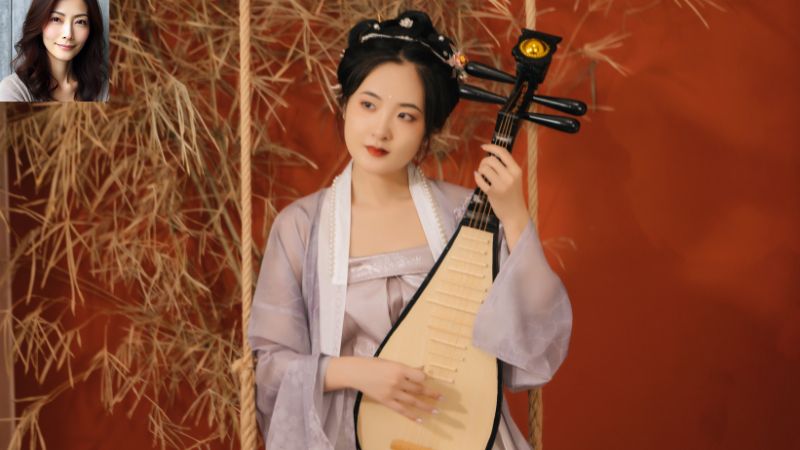
A professional musician with two patents and a problem no CV could solve
Ying Liang has taught pipa at Henan Vocational Institute of Arts since 2006. Her career spans performance, instruction, research, and music technology — she holds patents for a Music Rhythm Control Device and a Musical Tactile Vibration Device, has published in respected journals, and presented at international conferences. On paper, her credentials are strong. The NIW, however, doesn’t ask whether you’re accomplished. It asks whether your work serves a US national interest substantial enough to waive the normal employer sponsorship requirement. That’s a harder question for a specialist in Chinese folk music, and it required a different kind of argument.
The national interest argument doesn’t write itself — especially in a niche field
NIW petitions live or die on the Dhirani-Scharkoske framework: the field must have substantial merit and national importance, the applicant must be well-positioned to advance it, and the benefit to the US must outweigh requiring a job offer. For scientists and engineers, these arguments are well-trodden. For a pipa performer and folk music educator, none of the three pillars is obvious.
The petition had to demonstrate that Chinese folk music education has genuine national importance to the United States — not as a cultural nicety, but as a substantive gap in the country’s educational and cultural infrastructure that Ying Liang was specifically positioned to fill. That argument required research, specificity, and a narrative that connected her 17 years of expertise to something USCIS could recognise as a national interest.
Three pillars: cultural preservation, educational access, and music technology
Write Wing Media built the national interest case around three distinct arguments, each supported independently. First: cultural preservation and cross-cultural education. The US has a significant and growing Chinese-American population, and Chinese folk music traditions — particularly instruments like the pipa — are severely underrepresented in formal music education. Ying Liang’s work addresses a documented gap, not a preference.
Second: educational access in underserved communities. Her research included work on bringing traditional folk music instruction to areas lacking resources — a direct alignment with US education policy priorities. Third: music technology innovation. Her two patents sit at the intersection of traditional performance and assistive technology, with applications that extend well beyond folk music into broader music education and accessibility. Together, the three arguments made a case that was difficult to dismiss as merely personal interest.
Credentials assembled to address all three arguments simultaneously
The evidence package was built to support each pillar of the national interest argument. Recommendation letters came from distinguished professor Nan Li and renowned musician Mingyuan Gao — both chosen for their ability to speak to Ying Liang’s standing in the field with credibility that an adjudicator could assess. Her publications and conference presentations demonstrated active research contribution. The Chongde Cup First Prize for Outstanding Counselor in the National Teacher Moral Education Competition provided third-party recognition of her educational impact.
Write Wing Media also drew on her work on the digital construction of Henan Museum’s audio-visual database and her research into Henan folk songs — contributions that framed her not just as a performer but as a documented practitioner of cultural preservation with a research record to match.
Approved in three months — no RFE, faster than she expected
Ying Liang’s EB-2 NIW petition was approved within three months of submission, with no Request for Evidence issued. A clean approval at this speed reflects both the strength of the petition package and the clarity of the national interest argument — when the case is well-constructed and the evidence is coherent, adjudicators don’t need to ask follow-up questions. She is now positioned to teach, perform, and continue her research in the United States.
Niche expertise is not a liability — the argument just needs to be built differently
Ying Liang’s case is the clearest example in this collection of what it means to construct a national interest argument rather than assume it. Most NIW applicants in conventional fields can point to existing policy frameworks that already acknowledge the importance of their work. In a specialised cultural field, that scaffolding doesn’t exist — you have to build it from the evidence up. Write Wing Media identified the three angles where her work genuinely intersected with US interests, documented each one, and submitted a petition that gave USCIS a clear, evidence-backed answer to the only question that matters: why does the US need this person specifically?